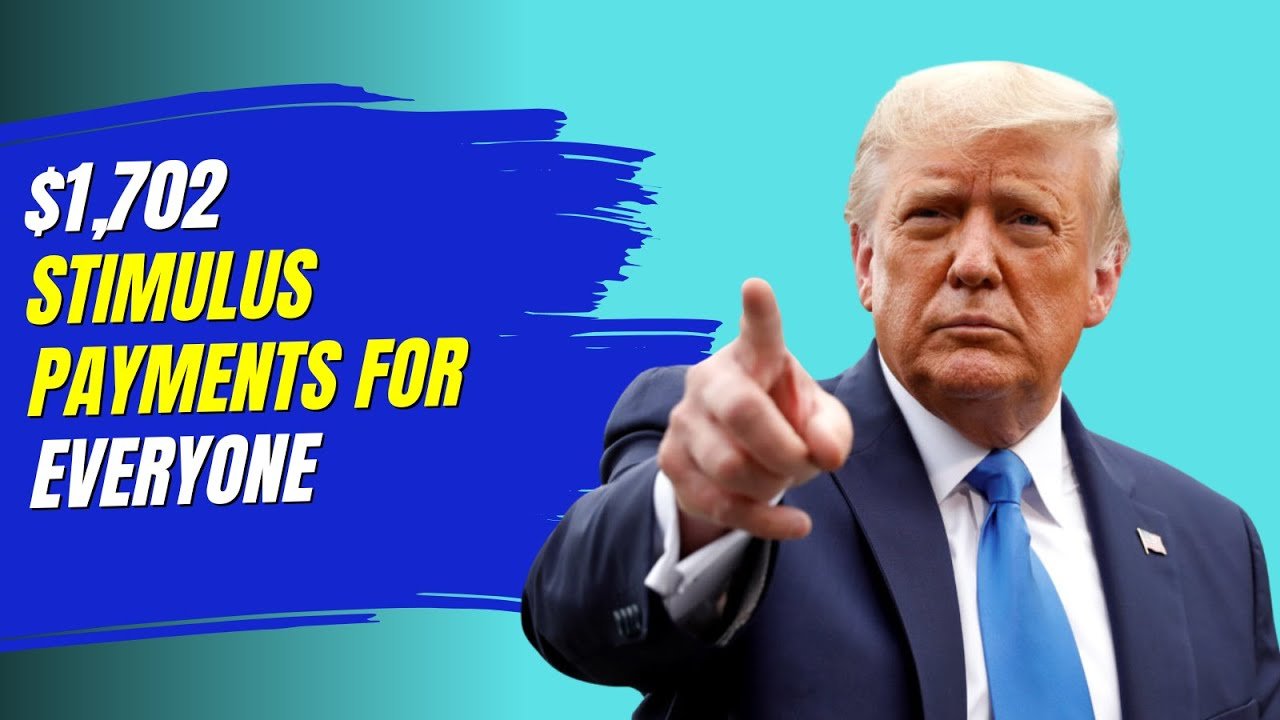
As December 2025 approaches, many Americans are seeking answers and anticipating a widely discussed $1702 Stimulus Payment, which is expected to reach eligible individuals by the end of the year. With rising grocery prices, higher utility bills, and holiday expenses straining household budgets, even a modest payment could provide significant relief to millions.
While the term “stimulus payment” evokes memories of previous federal relief checks, this December 2025 payment is being discussed as a targeted support measure tied to income levels, benefit status, and recent tax filings. Here is a comprehensive, easy-to-understand guide explaining what this $1,702 payment is, who might be eligible, and when the money could arrive.
What is The $1,702 Stimulus Payment?
The $1,702 stimulus payment is a proposed federal relief payment intended to help Americans cope with the ongoing financial pressures of inflation, housing costs, and healthcare expenses. While not officially termed a universal stimulus check, this payment is designed to reach a broad group of people—particularly low- and middle-income families.
This amount, $1,702, reflects cost-of-living calculations and benefit adjustments that have been widely discussed in policy and financial circles throughout 2025.
Who is Expected to Be Eligible?
While the final eligibility details will depend on IRS and federal guidance, this payment is expected to reach many Americans who fall into these groups:
- U.S. citizens or legal residents with a valid Social Security number
- Those who have recently filed a federal tax return
- Recipients of Social Security, SSDI, SSI, and VA benefits
- Low- and middle-income individuals, including retirees
- Families affected by inflation and those on fixed incomes
Income limits are expected to be similar to previous relief programs, with payments gradually phasing out for higher earners rather than stopping abruptly.
Complete Payment Schedule for December 2025
Payments in December 2025 are expected to be distributed in several phases, which will facilitate processing and minimize delays.
The tentative payment timeline includes:
- Early December 2025: Direct deposits for taxpayers with updated banking information
- Mid-December 2025: Payments for Social Security, SSI, SSDI, and VA beneficiaries
- Late December 2025: Paper checks and prepaid debit cards will be mailed to eligible individuals
Most people who receive direct deposit can expect to receive their payment within 3 to 7 business days of the payment batch being issued.
How will I Receive the $1,702 Payment?
The IRS will use the most current information it has on file. Payment methods include:
- Direct deposit – the fastest and most secure method
- Paper check – mailed to your registered address
- Prepaid debit card – used for certain individuals
To avoid delays, individuals are advised to confirm their banking and mailing information through official IRS channels.
Do You Need to Apply?
For most eligible individuals, no application is required. Payments are expected to be automatic for:
-
Tax filers
-
Benefit recipients
-
Retirees receiving federal benefits
However, you may need to take action if you:
-
Did not file a tax return recently
-
Changed your bank account or address
-
Believe you qualify but do not receive payment
In those cases, the payment may be claimed later as a credit on your tax return.
Why This Payment is Important
For many Americans, $1,702 could mean paying off outstanding bills, covering medical expenses, or simply providing some much-needed relief during the holiday season. This is especially true for senior citizens on fixed incomes and low-wage workers, who are often hit hardest by rising costs.
While this payment won’t solve long-term financial challenges, it can provide short-term stability at a time when prices are at their highest.
Frequently Asked Questions (FAQs)
Q 1: Is the $1,702 stimulus payment taxable?
No. Relief payments of this type are generally not considered taxable income.
Q 2: Will Social Security recipients receive this automatically?
Yes, most Social Security, SSI, SSDI, and VA beneficiaries are expected to receive it automatically.
Q 3: Can married couples receive more than $1,702?
In many cases, married couples may qualify for double payments, depending on eligibility rules.
Q 4: What if I don’t receive my payment in December?
You may be able to claim it later when filing your federal tax return.
Q 5: Will there be additional stimulus payments in 2026?
No additional payments are confirmed at this time. Future relief depends on economic conditions and federal decisions.
Q 6: How can I avoid delays?
Make sure your banking and address information is up to date with the IRS.
Final Thoughts
The proposed $1,702 stimulus payment for December 2025 offers a moment of relief during financially challenging times. Staying informed and prepared can help ensure you don’t miss out if the payment moves forward as expected.
